

How Survey Payouts Work: Minimums, Points and Timing

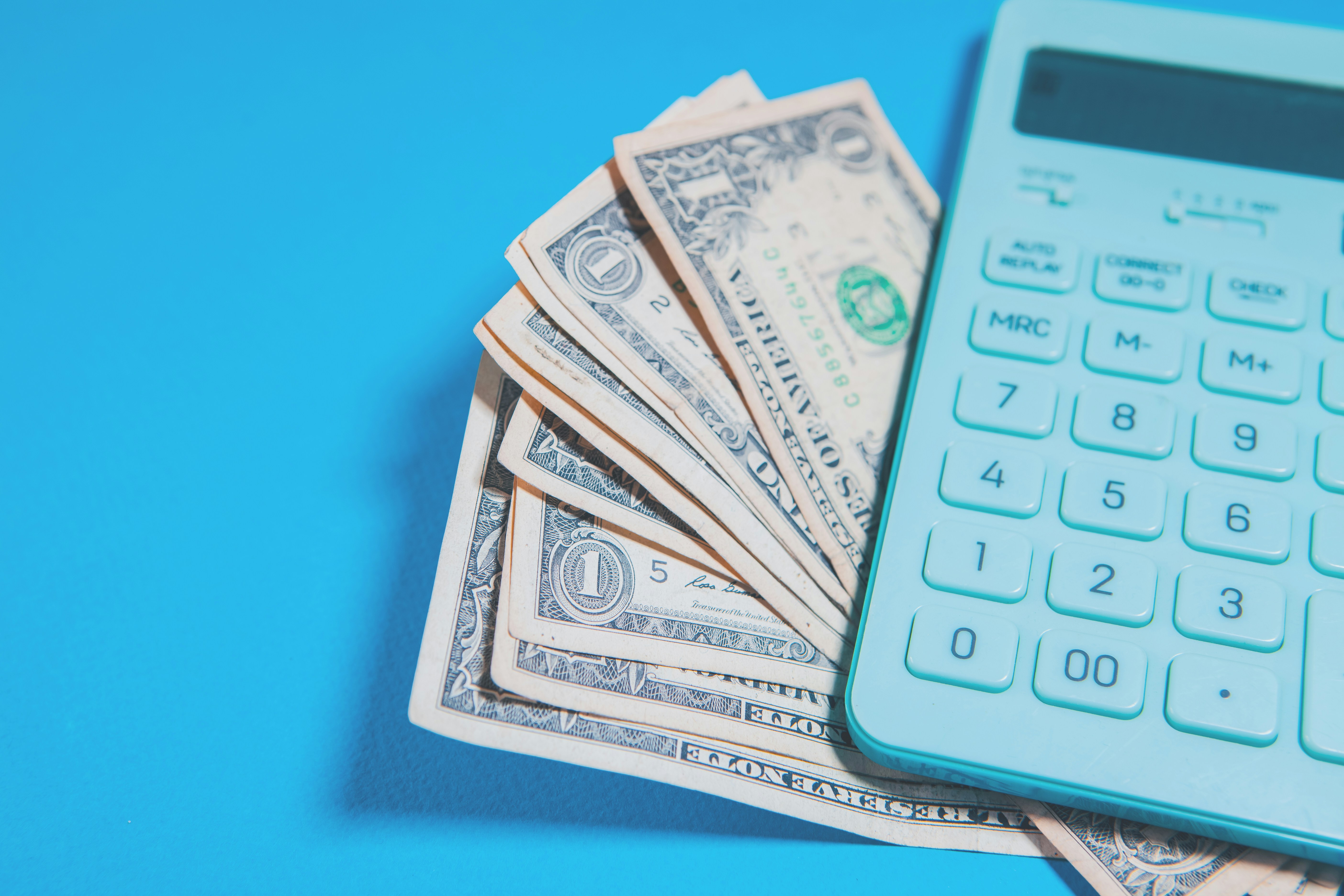
You have 4,870 points, the payout threshold is 5,000, and your first withdrawal request has been "pending" for three days. Most survey takers know this feeling, and it's exactly at moments like these that the thought "maybe this is a scam" comes up.
In reality, most payout rules have perfectly ordinary reasons behind them: payment processing fees, bot protection, and checking answers with the client. But payouts are also where honest sites differ most from dishonest ones, and you can spot the difference in advance, before you spend dozens of hours on a site.
In this article, we explain why minimum payouts exist, how to convert points to dollars, how payout methods compare, why withdrawals get delayed, and how to tell when a delay is no longer normal. If you're just getting started, read our guide to making money with surveys first.
Why Survey Sites Have a Minimum Payout
The minimum payout is one of the most common sources of frustration. It can feel like the site is simply holding on to your money. But there are two very real reasons behind it.
Reason 1: every payout costs money
When a company sends money to many people at once, the sender usually pays the fee. In the U.S., PayPal charges $0.25 per USD transaction for mass payouts sent through its API, and recipients pay nothing (Source: PayPal). Here's what that looks like in practice:
Payout amount | Fixed fee of $0.25 | Fee as a share of the payout |
|---|---|---|
$1 | $0.25 | 25% |
$5 | $0.25 | 5% |
$10 | $0.25 | 2.5% |
$20 | $0.25 | 1.25% |
For a platform that passes on only part of the client's budget to participants, a 25% fee on every one-dollar payout eats up a noticeable chunk of money. Other methods have costs too: according to Runa, a fintech company that handles payouts for research firms, card payment processing costs 1.5–3% per transaction, and bank transfers often carry fixed fees (Source: Runa). A minimum payout keeps these costs to a small share of the amount.
Reason 2: time for quality checks
While you build up to the minimum, the platform and its clients have time to check the quality of your answers. This matters because some online survey responses come from bots and dishonest participants. We explain how these checks work in our article on how paid surveys work.
What about sites with no minimum payout?
People search for "surveys with no minimum payout" a lot, and such sites do exist. But payout costs don't disappear, so these platforms usually make a trade-off: a fee on small withdrawals, gift cards only, a longer review, or lower pay for the surveys themselves. Don't compare the minimum on its own; compare three numbers together: the minimum, the fee, and how long it will take you to reach it.
A simple example: if you earn $3 a day on a site, you'll reach a $20 minimum in a week. At $0.30 a day, the same minimum will take more than two months. So what matters more than the size of the minimum is how quickly you can reach it on that particular site.
Points, Coins and Credits: How to Convert Them to Dollars
Many survey sites pay in their own currency rather than in dollars. That's convenient for the platform: one reward system works across countries and currencies. It's less convenient for you: "350 points per survey" sounds like more than "35 cents," even though they can be exactly the same.
The conversion formula
In the withdrawal section, find how many points a specific payout requires and calculate the value of one point:
value of one point = payout amount ÷ number of points required
Then convert the survey reward into dollars and into hourly pay. With hypothetical examples, it looks like this:
Rate on the site | Survey reward | In dollars | Survey length | Per hour |
|---|---|---|---|---|
1,000 points = $1 | 500 points | $0.50 | 10 minutes | $3 |
100 points = $1 | 150 points | $1.50 | 15 minutes | $6 |
10 points = $1 | 20 points | $2 | 20 minutes | $6 |
The last column is the most important one. It lets you compare different sites and different surveys, regardless of how impressive the reward sounds in points. For reference: the academic platform Prolific doesn't allow pay below £6 or $8 per hour (Source: Prolific, 2026), and the median pay per survey in Conjointly's 2026 survey was about $1 (Source: Conjointly, 2026).
What else to check in a points system
- Whether the rate is the same for all rewards. On some sites, a gift card costs fewer points than the same amount via PayPal. That's not a scam, but it's better to know in advance.
- Whether points expire. Many panels have an expiration period or an inactivity rule. For example, on one Nielsen panel, points expire 5 years after they're credited, and also if a member is inactive for 180 consecutive days or leaves the panel. Expired points can't be restored (Source: Nielsen). Other sites have their own terms, and this is the clause people skip most often.
- What happens to your balance if you delete your account. On many platforms, unredeemed points are lost, so withdraw everything you can before leaving.
- Whether the rate has changed. If a platform quietly raises the number of points needed to cash out, or the rate isn't listed anywhere, that's a warning sign.
Payout Methods: Which One to Choose
Gift cards have long been the main reward for surveys, and their role keeps growing: according to Incentive Research Foundation data cited by Runa, spending on gift cards as incentives grew 42% in North America and 37% in Europe in 2024. But the same source notes that participants increasingly expect choice: prepaid cards, bank transfers, and e-wallets (Source: Runa).
Method | Pros | Cons | Best for |
|---|---|---|---|
PayPal | Spend the money on anything or move it to your card; works in many countries | Requires an account; PayPal may charge its own fees for currency conversion and transfers to a card | People who want actual cash |
Gift cards (Amazon, retailers) | Often a low minimum, sometimes a bonus on top | Can only be spent at one store; not available in every country | People who already shop at that store |
Bank transfer | Money goes straight to your account | Often available only in some countries; you need to enter bank details | People without PayPal |
Cryptocurrency | Available in countries without PayPal; often fast | The exchange rate changes; a wrong wallet address can't be fixed | People who already use a crypto wallet |
Charity donation | No personal wallet needed | The money doesn't go to you | People who take part for reasons other than money |
A few practical tips:
- Look at the whole chain of fees. The site may charge nothing, but the payment provider may take a fee when you convert to another currency or move money from your wallet to a card.
- Check your details before the first withdrawal. Your PayPal email and crypto wallet address must match character for character. A payout sent to the wrong address often can't be recovered.
- Don't confuse a payout method with account access. To pay you, a site needs an email or wallet address, never a password, a text-message code, or a seed phrase. The Minnesota Attorney General's Office describes fake surveys that ask for a bank account "to send the payment" and then use it for fraudulent charges (Source: Minnesota Attorney General).
- Remember taxes. In the U.S., survey income is taxable even if the platform didn't send you a 1099 form and paid you in gift cards. We cover this in more detail in our guide to making money with surveys.
Why Withdrawals Get Delayed, and Where Normal Ends
A withdrawal request marked "pending" isn't a reason to panic on its own. Honest platforms have several typical reasons for delays:
- Your first withdrawal. New accounts are often reviewed manually for duplicate sign-ups, VPN use, and suspiciously fast answers. Later withdrawals usually go faster.
- Answer quality checks. The client or the platform may confirm a survey with a delay. Until it's confirmed, the reward may show as "pending" and not yet be available to withdraw.
- Payout schedules. Some sites don't pay immediately but in batches: once a week or on certain days.
- Third-party gift cards. The card code is issued by a separate provider, which adds another link to the chain.
Normal delays vs. warning signs
The key difference is whether there are rules you can point to. In Conjointly's 2026 survey, panel members most often complained about disqualifications, low pay, and broken surveys (Source: Conjointly, 2026). That's annoying but normal for the format. Payouts are different: here there's a clear line between an inconvenience and a problem.
Situation | Probably normal | Probably a problem |
|---|---|---|
Payout timing | Matches what the terms say, even if it's several days | The deadline passed long ago and no new date is given |
Support | Replies and explains the reason | Silent, or replies with a template and no details |
Balance | Some rewards are "pending" and then get confirmed | The balance shrank or dropped to zero with no explanation |
Account suspension | They cite a specific rule (VPN, a second account) | The account is blocked right when you reach the minimum, with no reason given |
Terms | The minimum and fees are described up front | A new condition appears once you reach the minimum |
Paying to withdraw | A fee is deducted from the payout and was disclosed in advance | You're asked to send money to "unlock" your withdrawal |
The last row matters most. This is exactly how task scams work: "earnings" grow on the screen, and to withdraw them you're asked to make a deposit, often in crypto. According to the FTC, about 20,000 reports of these schemes came in during the first half of 2024 alone (Source: FTC Data Spotlight, 2024). On an honest platform, you never pay to receive your own money.
What to do if your payout is stuck
- Check the terms. Find the promised processing time and see whether it has passed.
- Check your payout details. A typo in your email or wallet address is a common reason for stuck payouts.
- Contact support. Include the request date, amount, and payout method, and attach a screenshot.
- Don't pay anything to "unlock" it. If instead of an answer you're asked to pay, stop using the site.
- Don't keep earning there. Until the issue is resolved, don't invest more time in that site.
Checklist: 8 Payout Questions to Answer Before You Sign Up
On an honest platform, the answers to these questions are in the FAQ, the terms, or the withdrawal section before you even sign up. If you can't find more than half of them, that's an answer in itself.
- What's the minimum payout for each payout method?
- Is there a fee, and who pays it?
- Which payout methods are available in your country? The options often depend on where you live.
- What processing time is promised, and is the first withdrawal different from later ones?
- What's the points-to-dollar rate, and is it the same for all rewards?
- Does your balance expire over time, after inactivity, or when you delete your account?
- What can get a reward reversed or an account suspended? The rules should be specific.
- What details are needed to pay you? An email or wallet address is fine. A password, access to your account, or an upfront payment is not.
And the most important rule in practice: cash out for the first time as early as you can. Until you've actually received a payout, any number on your balance is just a promise. We covered the other signs of an honest platform, beyond payouts, in our article on how to tell real survey sites from scams.
How Payouts Work on RapidWorkers
Since we recommend checking payout terms in advance, here are our answers to this checklist:
Question | RapidWorkers |
|---|---|
Minimum payout | $20 |
Withdrawal fee | None |
Payout methods | PayPal and cryptocurrency |
Processing time | Within 24 hours in most cases |
Typical pay per task | $0.10–1 |
What you need to start | Free sign-up and email verification |
RapidWorkers offers surveys from research partners as well as microtasks, and both are available in one account. We explain how to combine the two in our article Paid Surveys vs. Microtasks.
Frequently Asked Questions
Why do survey sites have a minimum payout?
Every payout costs the platform money: for example, in the U.S., PayPal charges senders of mass payouts through its API $0.25 per transaction. A minimum keeps these costs to a small share of the amount and gives time to check the quality of answers.
How much are survey points worth?
Each site has its own rate. Divide the payout amount by the number of points it requires: if $10 costs 10,000 points, one point is worth a tenth of a cent. Then convert the survey reward into hourly pay, which is the easiest way to compare sites.
Are sites with no minimum payout better?
Not necessarily. They still have payout costs, and these are often passed on to participants through fees, gift-card-only payouts, or lower survey pay. Compare the minimum, the fee, and the hourly pay together.
How fast do survey sites pay?
It varies, from a few hours to several weeks. Go by the processing time stated in the terms, not by reviews, and keep in mind that the first withdrawal often takes longer because of account review.
Can a legit site charge me to withdraw?
It can deduct a fee disclosed in advance from the payout itself. But if you're asked to send money separately to "unlock" your withdrawal, for "taxes," or for "verification," it's a scam.
The Bottom Line: Check Payout Terms Before Your First Survey
Minimum payouts, points, and "pending" status are a normal part of how survey sites work. They're explained by payment costs, bot protection, and dealing with different countries' currencies. The problem starts where the rules disappear: deadlines are missed, your balance shrinks without explanation, or you suddenly have to pay to withdraw. Convert points into hourly pay, check the terms before you sign up, and cash out for the first time as early as you can.
If you want to see how this works in practice, sign up as a worker on RapidWorkers: sign-up is free, you only need to verify your email to get started, and you can withdraw to PayPal or crypto from $20 with no fee, with most withdrawals processed within 24 hours.
Ready to Get Started?
Join thousands of workers and employers already using RapidWorkers to get tasks done fast.
- No subscription
- Cancel anytime
- 24/7 availability
- Dispute resolution