

Are Paid Surveys Legit? How to Spot Real Sites vs Scams

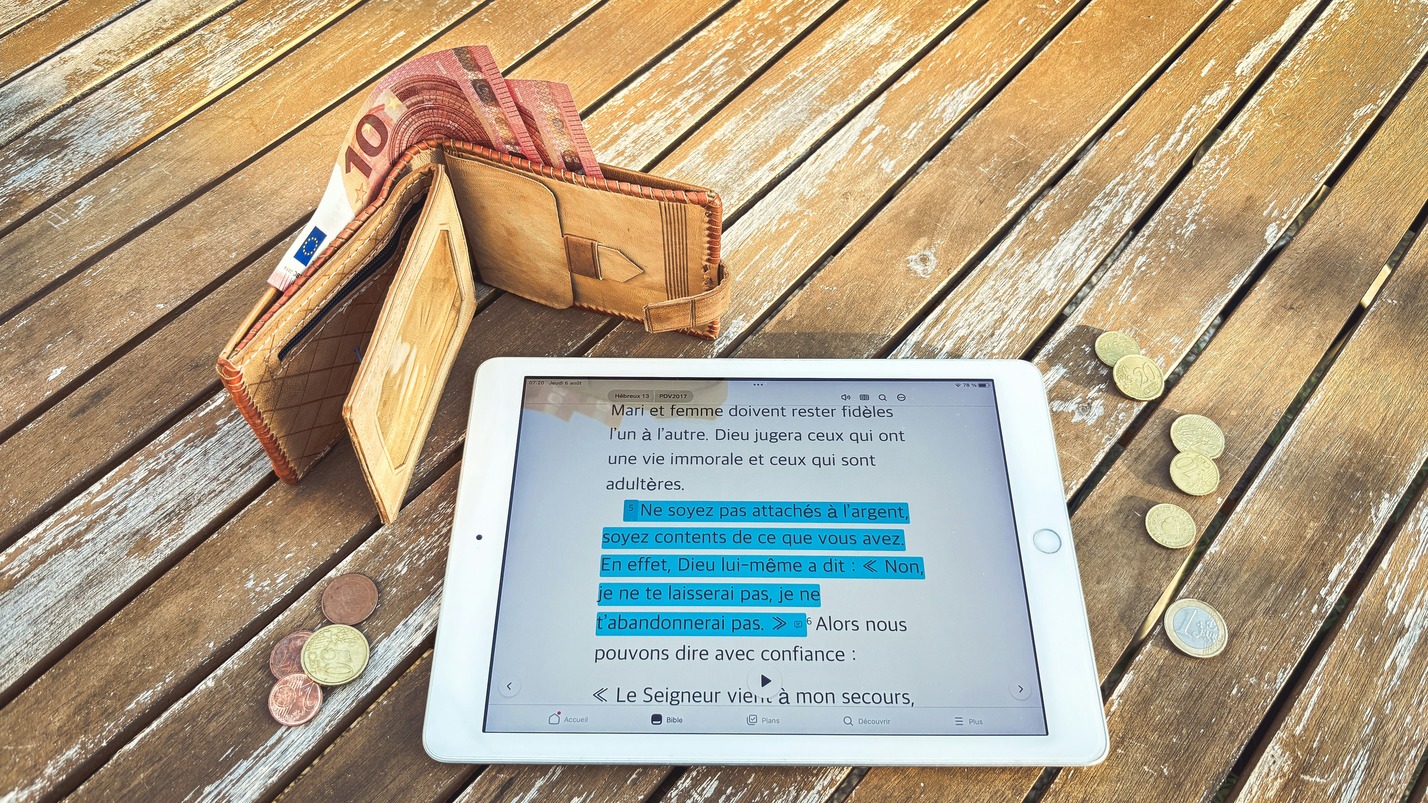
In 2025, Americans filed 3 million fraud reports with the Federal Trade Commission (FTC) and reported losing $15.9 billion. Text messages were the most common way scammers made first contact (Source: FTC testimony to the U.S. Congress, 2026). Many of those stories started with a promise of easy money for simple online work. So asking "are paid surveys actually legit?" is a perfectly reasonable question.
The short answer: yes, paid surveys are real, and there is a genuine research industry behind them. But scammers operate right next to it and copy its format. In this article, we look at why even honest survey sites often feel like scams, how the most common schemes work, how to check a platform in 10 minutes, and how to read reviews without falling for fake ones.
If you've already decided to earn with surveys and want to get more out of each hour, see our guide How to Make Money Doing Surveys. This article is about not losing your money or your personal data.
Why Honest Survey Sites So Often Feel Like Scams
Read the reviews of almost any survey platform and you'll see the word "scam." But often there's no fraud behind it, just unmet expectations. In June 2026, Conjointly surveyed 554 members of U.S. research panels. Their most common complaints were disqualification without compensation, inaccurate time estimates, low pay, broken surveys, and too few available surveys (Source: Conjointly, 2026). All of these are frustrating, but none of them on its own means a site is a scam.
What's frustrating | Why it happens on honest sites | When it's a real warning sign |
|---|---|---|
Getting disqualified halfway through | The client needs a narrow group of people, and quotas fill up fast | You're almost always disqualified, but only after questions about your bank or ID |
Low pay | Short surveys pay little; the median is about $1 per survey | The pay is unrealistically high instead: $50–100 for a few questions |
High minimum payout | A minimum reduces the cost of processing tiny payments | Once you hit the minimum, a new condition appears or you're asked to pay to withdraw |
Slow payout review | The platform checks your account for bots and duplicate sign-ups | Your payout is "processing" for months and support doesn't reply |
A completed survey gets reversed | You failed an attention check or finished too fast | It's reversed with no explanation and no rules you can point to |
Pay in points | Points make it easier for the platform to pay in different currencies | The points-to-cash rate isn't listed anywhere or keeps changing |
The difference between a bad site and a scam is simple. A bad site pays little and is inconvenient to use. A scam doesn't pay at all, or takes your money and data. The first is a question of choosing the right platform; the second is a question of safety. That's why the checklist below splits warning signs into two levels: "inconvenient" and "dangerous."
Six Schemes That Pose as Paid Surveys
1. A fake survey from a well-known brand
You get a text or email "from a store" or "from a delivery service": answer a few questions and get a gift card. The Better Business Bureau cites examples using the USPS, Costco, and The Home Depot brands, with rewards like a $100 Lowe's gift card for a single survey (Source: Scripps News, 2023). The goal is your personal data: your Social Security number, driver's license number, and answers like "what school did you attend," which are often used as security questions for account access. Real brands do ask for feedback, but they don't promise $100 for it or ask for your ID details.
2. "Pay to get paid": task scams
This scheme has grown especially fast in recent years. According to the FTC, about 20,000 reports of these "task jobs" came in during the first half of 2024, compared with about 5,000 in all of 2023, and their share of all job scam reports rose to 38.8% (Source: FTC Data Spotlight, 2024). It usually unfolds like this:
- An unexpected WhatsApp message or text offers simple online work.
- You do tasks in an app: rate products, like videos, take a short survey. Your "earnings" grow on the screen.
- The first small payouts actually arrive, so you start to trust it.
- Then you're asked to deposit money, often in crypto, to "unlock the next set of tasks" or withdraw what you've earned.
- The "earnings" on the screen are fake, and the money you deposited is gone.
The FTC's rule here is simple: never pay to get paid. On a real survey or microtask platform, workers never make a deposit to work or to withdraw money.
3. "We need your bank account number to pay you"
The Minnesota Attorney General's Office describes a survey that promises money for taking part, then asks for a bank account "to send the payment" and uses it for fraudulent charges. It also describes an online survey that collects your name, phone number, email, and date of birth, after which unauthorized paid services show up on your phone bill (Source: Minnesota Attorney General). On honest platforms, you choose your payout method (PayPal, bank transfer, gift cards) in your account settings, not in a survey form. And no one needs access to your account, your banking password, or a code from a text message to pay you.
4. Paid sign-up or a "premium list of sites"
Some sites offer to sell you "access to the highest-paying surveys" or a list of "secret platforms." It's the same "pay to earn" principle. Signing up for real survey platforms is free, and lists of them are freely available.
5. A prize with a shipping fee
After a survey, you're told you've won a smartphone or a trip and only need to pay for shipping or taxes. In reality, your card details are used for charges or a subscription, and there's no prize. In real surveys, they pay you, not the other way around.
6. A sales pitch disguised as research
The call starts with "we're conducting a survey" and ends with a hard sell for a travel club membership or a subscription. This is how scammers get around the Do Not Call rules: in the U.S., those rules don't apply to genuine research (Source: Minnesota Attorney General).
How to Check a Survey Site in 10 Minutes
You don't need special knowledge for this. Just go through these steps before you sign up and before you enter anything about yourself:
- How did you find the site? If it was through an unexpected text, a WhatsApp message, or an ad promising big money, you can stop here. That's exactly how task scams and fake brand surveys begin.
- Check the web address. Typos in a well-known brand name, odd domains, and link shorteners are classic signs of a fake.
- Find the payout terms. The minimum, fees, payment methods, and payout times should be stated openly before you sign up.
- Check the terms of service and privacy policy. An honest platform has terms of use, information about who owns it, and a way to contact support.
- Look at what they ask for at sign-up. Email, country, age: fine. Your Social Security number, card details, or email password at this stage: stop.
- Check whether there's an entry fee. Any payment for sign-up, "activation," or "premium" makes further checking unnecessary.
- Search the name plus "scam," "reviews," "payment proof." Don't look at the average rating; look at what the complaints are about and whether the platform responds. We cover how to do this below.
- Cash out for the first time as early as you can. This is the most reliable test. Don't invest a lot of time until you're sure the money actually arrives.
An extra signal: industry associations
The research industry has its own professional bodies with codes of ethics. Internationally, there's ESOMAR; nationally, there's the Insights Association in the U.S., the Market Research Society in the UK, CRIC in Canada, and The Research Society in Australia. If a platform says it's a member of one of them, you can check on the association's own website.
Another useful document is a company's answers to ESOMAR 37. It's a list of 37 questions that research buyers ask online sample providers: where participants come from, how they're verified, and how their data is protected. Large panel companies publish their answers openly. For example, Kantar states in its answers that participants see the reward and survey length before starting and can manage their consent settings in their account (Source: Kantar, ESOMAR 37).
That said, not being a member doesn't make a site a scam. Many honest platforms, especially smaller ones or mixed platforms that offer other tasks besides surveys, don't belong to any association. But an association logo that can't be confirmed on the association's own website is a bad sign.
Two levels of warning signs
Not every problem means fraud. To avoid confusing an inconvenient site with a dangerous one, it helps to sort the signs like this:
"Inconvenient": the site may be honest but not right for you | "Dangerous": better to leave right away |
|---|---|
High minimum payout | You're asked to pay to start working or to withdraw money |
Pay in points or gift cards | You're asked for card details, bank details, your SSN, or a photo of your ID inside a survey |
Frequent disqualifications | Communication and payments move to WhatsApp or Telegram |
Few surveys for your country | The reward is unrealistically high for such simple work |
Slow review of your first payout | Your payout is endlessly "processing," with no rules and no reply from support |
Clunky interface or no app | The web address looks like a well-known brand, but with a typo |
If a site passes the check but you don't like its terms, that's a matter of choice, not safety. For comparison: on RapidWorkers, sign-up is free, you only need to verify your email to get started, you can withdraw to PayPal or crypto from $20 with no fee, and in most cases withdrawals are processed within 24 hours.
How to Read Survey Site Reviews Without Falling for Fake Ones
Reviews are useful, but you can't trust them blindly. In 2024 alone, Trustpilot removed 4.5 million fake reviews, or 7.4% of all reviews submitted that year (Source: Trustpilot Trust Report, 2025). In the U.S., an FTC rule in effect since 2024 explicitly bans buying and publishing fake reviews (Source: Perkins Coie, 2024), but fake reviews still show up. Here's how to tell a useful review from a useless one:
- A useful review is specific. It mentions an amount, a payout method, a timeframe, a country. "Cashed out $20 to PayPal, arrived the next day" is worth more than "best site ever, highly recommend."
- Look at what the negative reviews say. Every honest platform gets complaints about disqualifications and low pay. The worrying ones are different: mass account bans right before payout, missing money, and demands for payment.
- Check whether the platform responds. Honest services reply to negative reviews and explain what happened.
- Be careful with sudden spikes. Lots of five-star reviews within a couple of days, written in similar phrases, are a classic sign of fake reviews.
- Payout screenshots aren't proof. They're easy to fake, and task scams use exactly these images to lure people into group chats full of "success stories."
The Key Test: Who Pays Whom
If you remember only one thing from this article, make it this. On an honest survey platform, money flows from the companies commissioning research to you: the platform earns its share, and it needs you to stay and take more surveys. With a scammer, money flows from you: through a deposit, a "premium" plan, a prize shipping fee, or through your data, which is later sold or used for theft. If at any step the direction changes and you're the one who has to pay, it's not a survey platform.
The same test works for any online side gig: microtasks, app testing, AI tasks. Learn more in our realistic guide to earning money with microtasks and our article on work-from-home side jobs.
Frequently Asked Questions
Are paid surveys a real way to make money?
Yes, there's a real market research industry behind them. But it's a side gig: the median pay in Conjointly's 2026 survey was about $1 per survey. Sites that promise salary-level earnings are the first ones you should check.
Do real survey sites ask you to pay to join?
No. Signing up, taking surveys, and withdrawing your earnings are free on honest platforms. A payment provider may take its own fee from a payout, and that's stated up front in the terms. But if you're asked to send money yourself for access, "activation," taxes, or unlocking a withdrawal, it's a scam.
Can a legit site ask for my ID?
Sometimes, but not inside a survey. Some platforms verify your identity before a payout through a separate secure service, and this is described in their terms. If you're asked to enter your Social Security number or a photo of your passport directly in a survey form, that's a reason to stop.
Why was my account blocked before payout? Is it a scam?
Not necessarily. Honest platforms block accounts for using a VPN, having multiple accounts, and giving inconsistent answers. But they have rules you can point to and a support team that explains the reason. A ban with no rules and no reply is a warning sign.
Can I trust surveys sent by text or email from brands?
Better not. Text messages were the most common contact method for scammers in the FTC's 2025 data. If you want to leave feedback for a store, go to its official website yourself instead of following a link in a message.
What should I do if my payout is stuck on a survey site?
Check the processing times in the terms and contact support with your request number. If the deadline has long passed, support is silent, and you're suddenly asked to pay to withdraw, don't pay anything and stop spending time on that site: chances are you won't see that money.
The Bottom Line: Paid Surveys Are Legit When They Pay You, Not the Other Way Around
Paid surveys aren't a scam, but they aren't fast money either. Disqualifications, small payouts, and minimum withdrawal amounts are a normal part of the format. The real warning signs are different: unexpected offers by text or WhatsApp, fees for access or withdrawal, requests for card details and ID in a survey form, and unrealistically high rewards. Ten minutes of checking before you sign up and an early first payout will protect you from most problems.
If you want to try surveys and microtasks on a platform with transparent terms, sign up as a worker on RapidWorkers: sign-up is free, and you can withdraw to PayPal or crypto from $20 with no fee.
Ready to Get Started?
Join thousands of workers and employers already using RapidWorkers to get tasks done fast.
- No subscription
- Cancel anytime
- 24/7 availability
- Dispute resolution